
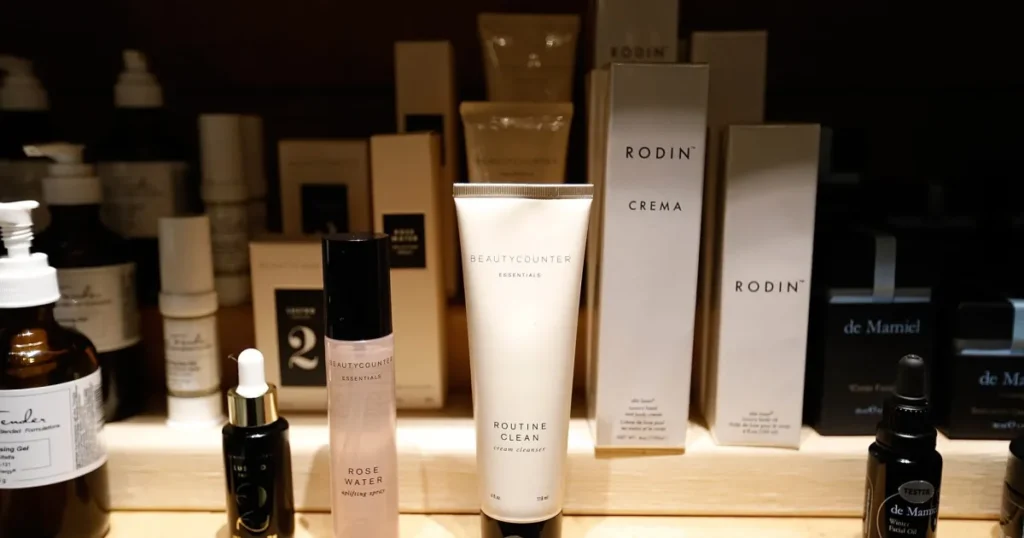
Clean Beauty Dominated Skincare and Is Now Transforming Kitchens
The clean beauty movement encouraged individuals to rethink their skincare products, and that same mindset is now transitioning to our kitchens.
Beauty consumers have been trained to look beyond attractive packaging and pose deeper questions: What ingredients are in this product? Is it safe for use? Does it have environmental benefits? Are terms like “natural,” “clean,” and “non-toxic” simply marketing jargon?
Similar inquiries are now being directed towards non-toxic and nonstick frying pans.
What Is the Clean Beauty Movement?
Clean beauty typically signifies skincare products crafted without ingredients deemed harmful to human health or the environment. According to Harvard Health, the ingredients most frequently avoided in clean beauty fall primarily into three categories: irritants or allergens, potential endocrine disruptors, and possible carcinogens.
This concern has led to the rise of beauty labels such as non-toxic, vegan, cruelty-free, green, natural, organic, sustainable, and biodynamic. The objective remains straightforward: to provide cleaner options that benefit both individuals and the planet.
However, a significant drawback of clean beauty is the lack of a clear federal definition of “clean.” Each company may interpret it differently, resulting in self-regulated labels.
This confusion is compounded by outdated regulations. Federal cosmetic laws are nearing 90 years in age, with the FDA listing only 11 ingredients in its “Prohibited & Restricted Ingredients in Cosmetics,” compared to 500 in Canada and 1,600 in Europe.
Nonetheless, clean beauty has transformed consumer shopping behavior, teaching them to scrutinize labels, question vague marketing claims, and evaluate their daily exposures more critically.
The Kitchen Is Having Its Clean Beauty Moment
Non-toxic cookware is undergoing a similar evolution.
In the context of cookware, “non-toxic” generally pertains to pans manufactured without harmful chemicals, especially PFAS—known as “forever chemicals”—which are present in certain traditional non-stick coatings. For many years, non-stick cookware was favored as Teflon (or PTFE) made cooking and cleanup effortless.
However, consumers are now more aware of the effects of aging, scratching, or overheating coatings. Inhaling fumes from overheated non-stick cookware can cause flu-like symptoms, often referred to as Teflon flu. Increased awareness of PFAS has highlighted alternatives like ceramic, cast iron, stainless steel, and carbon steel.
The concern is that cookware faces the same labeling dilemmas as beauty products. There are no federal guidelines that define “non-toxic” cookware, allowing brands to use the term loosely. A pan marked “PFAS-free,” “PTFE-free,” or “ceramic-coated” may seem reassuring, yet such claims do not always share the same meaning.
This is where understanding labels becomes crucial. “Steering clear of products containing PFAS, including cookware, may help safeguard both your health and the planet,” stated Eric Boring, PhD, in an interview with Consumer Reports. He suggested that consumers looking to avoid PFAS in nonstick cookware should ideally seek products marketed as PTFE-free.
Is ‘Non-Toxic’ Cookware the New ‘Natural’ Skincare?
In many respects, yes. Shoppers are investigating PTFE, PFOA, and forever chemicals in cooking pans similarly to how clean beauty consumers questioned parabens and phthalates in skincare.
Both trends are fueled by wellness culture, social media, environmental concerns, and a distrust of products viewed as safe until proven harmful. Both also illustrate how quickly a beneficial concept can morph into a confusing marketing buzzword.
An essential difference exists: PFAS regulation is gaining traction. PFOA, a chemical previously used in Teflon production, was phased out in the United States by 2015. Mark Ruffalo helped raise awareness of this issue through the 2019 film “Dark Waters,” which chronicled an attorney’s efforts to address PFOA contamination in a community’s water supply.
However, Teflon, or PTFE, is still classified within the PFAS family. According to USA Today, states such as Minnesota, Maine, Connecticut, Rhode Island, and Colorado have enacted laws prohibiting PFAS in cookware.
California attempted a similar initiative, but Gov. Gavin Newsom opted not to sign the bill after celebrity chefs Rachael Ray, David Chang, and Thomas Keller, who have their own non-stick cookware lines, defended the use of PFAS. Ruffalo criticized Ray for opposing the legislation.
Does the Perfect Pan Even Exist?
The intricacies of non-toxic cookware echo the complexities found in clean beauty. Critics of clean beauty highlight the lack of scientific evidence proving that “clean” ingredients are genuinely safer or that avoided ingredients are inherently harmful.

Cookware presents a similar gray area. There isn’t sufficient evidence proving that Teflon, when utilized correctly, poses a danger. According to WebMD, PTFE particles may occasionally flake off Teflon-coated cookware; however, they are not harmful when ingested.
The larger issue is that many individuals do not use nonstick cookware correctly, while numerous non-toxic alternatives are either cost-prohibitive or more challenging to use. This complexity renders the search for the “perfect pan” nearly impossible.
A more viable approach would be a balanced perspective: comprehend the labels, select the suitable pan for each task, and avoid viewing “non-toxic” as a magical term. Clean beauty has taught consumers to examine their serums; now it is also guiding them to scrutinize their skillets.