
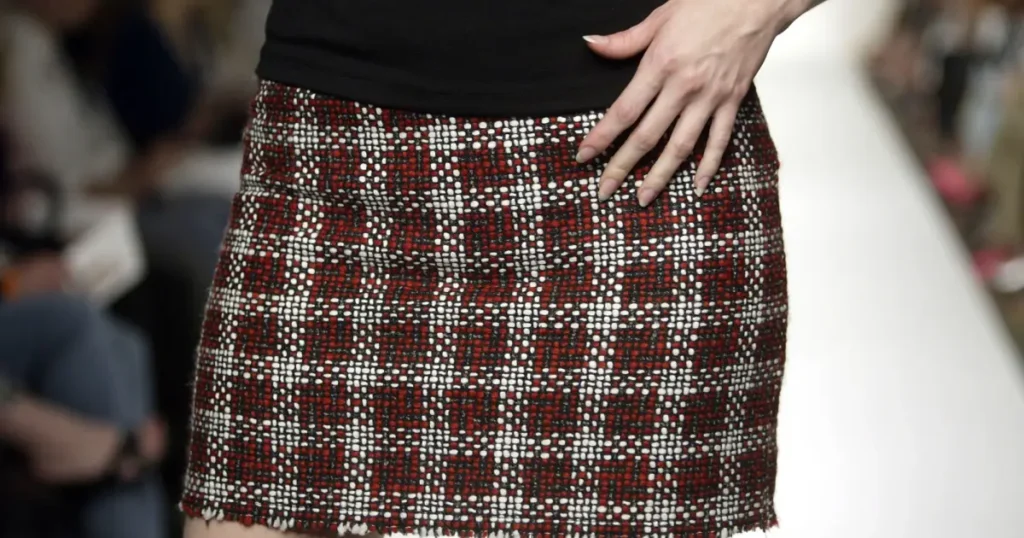
The Return of the Iconic Skirt Flip from ‘Girls Just Want to Have Fun’
In the 1985 film Girls Just Want to Have Fun, there’s a memorable scene where Lynne (Helen Hunt) requests Janey (Sarah Jessica Parker) to cover her on the bus as she transforms her Catholic school skirt into a sequined miniskirt. Fast forward forty years, and that swift change is back in vogue.
Reversible garments are experiencing a revival, and this time it’s more purposeful. They align with four key concerns of today’s shoppers: capsule wardrobes, cost per wear, light packing, and sustainable fashion.
This trend partly stems from a growing fatigue with fast fashion.
“Consumers seem to be adopting shopping habits reminiscent of decades past, seeking durable pieces that truly last,” Amelia Turnbull, founder of Melia Ann, shared with Forbes. “Fast fashion has burned many out, leading to a genuine appreciation for quality and the pursuit of a personal style.”
Her Queensland brand, launched in 2025, has already seen sellouts of various reversible skirts, shorts, jackets, and tops.
The appeal lies in the multifunctionality of a single item. One reversible top can stand in for several, easily serving as a fundamental piece in a capsule wardrobe, which is centered around owning fewer, better items.
“Versatility allows for garments to be styled and worn in various ways. When one piece can fulfill multiple roles, it lessens the need for more,” designer Ashita Fernandes, whose Awakened Grace collection features an array of reversible options, told Indulge Express.
This versatility also changes the financial calculations. Cost per wear is calculated by dividing the price paid by the frequency of wear. A $50 shirt worn 100 times costs $0.50 per wear, while a $10 shirt worn five times costs $2 per wear.
Since reversible and convertible clothing encourages more frequent use, a higher initial cost often pays off in the long run.
“For consumers, it boils down to maximizing the value of their expenditures,” Turnbull explained to Forbes. “People’s shopping habits evolve once they own something like this, becoming more intentional about their purchases.”
The Impact of Reversible Clothing on Sustainable Fashion Trends
The environmental implications amplify the trend’s significance. The fashion industry ranks as the second-largest consumer of water and accounts for up to 8% of global carbon emissions and millions of tons of textile waste, according to the Geneva Environment Network.
For some consumers, the push towards sustainable clothing is a primary motivation for this switch.
“I used to be an avid fast fashion shopper,” Elli Vermey, founder of Reverse Her, revealed on Instagram. “That changed after learning about the realities behind those low prices. Fashion waste is troubling, but the unethical practices are what really turned me off from many brands.”
Reversible clothing also addresses a more practical challenge: space. For those who travel frequently, it reduces packing volume without sacrificing outfit variety.
“Every traveler knows the value of packing light while maintaining clothing versatility,” frequent flyer Tyler Ferbrache shared on Instagram. “I want items that are machine washable, can be styled multiple ways, and will keep my luggage light while providing varied outfit options.”

Currently, this resurgence appears less about nostalgia and more about the prospect of achieving more with less.
“I’m eager to challenge and expand the boundaries of reversible fashion, experimenting with different textiles and creating innovative, adaptable designs,” Turnbull expressed. “I believe we can produce pieces that remain relevant year-round, transcending mere trends.”
Whether the aim is to construct a streamlined capsule wardrobe, lighten luggage, or minimize environmental impact, one transformative piece can perform the roles of many. For those focused on reducing their cost per wear, reversible clothing could be the solution.