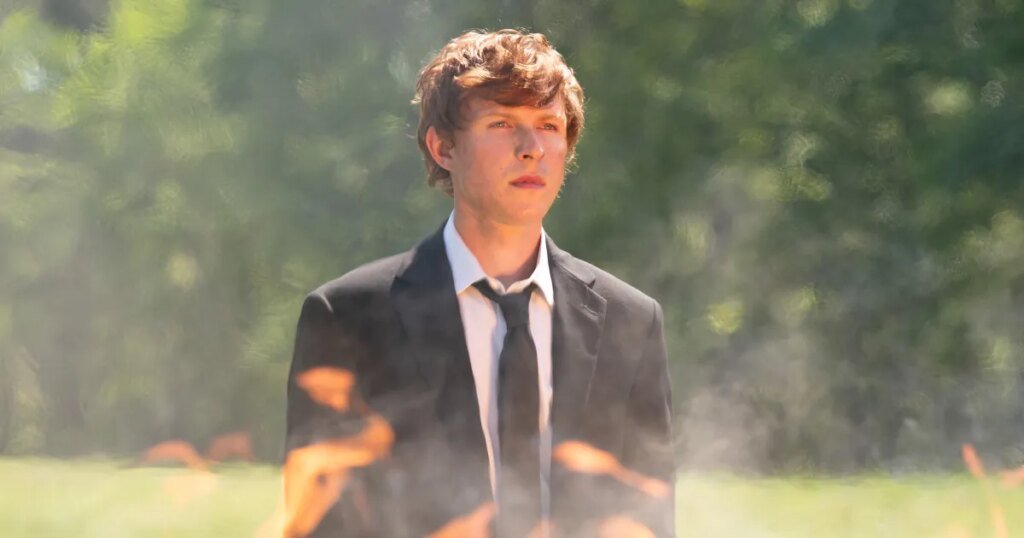
How Johnny Berchtold Transformed into ‘Villain to Victim’ Paul Murdaugh
Johnny Berchtold realized he had a significant challenge ahead when he was selected to portray Paul Murdaugh in Murdaugh: Death in the Family.
“At the start, he’s in a particular mindset. He’s the life of the party during that time and has grown up believing he can escape consequences. He seems to get away with much, being the youngest in the Murdaugh family, which adds immense pressure. It’s his way of seeking attention,” Berchtold, 31, shared exclusively with Us Weekly. “Then everything changes, and he starts to witness the repercussions of his actions — consequences that are tragically severe. He becomes defensive and overwhelmed with fear.”
Berchtold appreciated the opportunity to portray this character’s evolution.
“We end up seeing a young man trying to piece his life back together. That transition was beautifully woven by the writers and our team, showing the shift from villain to victim,” he remarked. “I felt truly thankful to portray that journey, as it depicts a very authentic experience.”
Throughout the filming, Berchtold’s view on true crime evolved, stating, “As an actor, feeling empathy for any role is essential. With this, I was already familiar with the case and was forming my own judgments while absorbing other perspectives. This experience prompted me to deeply reflect on how we perceive others when we choose not to view them as human beings.”
Murdaugh: Death in the Family, which launched in October, focuses on Alex Murdaugh (Jason Clarke), who faced double murder charges in 2022 following the deaths of his wife and son.

Currently, Alex faces a total of 102 grand jury criminal charges and 19 indictments concerning fraud and drug-related offenses. He has been disbarred, had his assets confiscated, and is serving two consecutive life sentences for the murders of Maggie (Patricia Arquette) and Paul.
Drawing from the “Murdaugh Murders” podcast, Murdaugh: Death in the Family aims to clarify the scandals, deaths, and murder trial encircling the infamous family while fostering a more “nuanced” perspective — particularly in relation to Paul.
“I truly feel that Paul didn’t have a chance given his upbringing,” Berchtold told Us. “It genuinely saddens me. Still, while we shouldn’t excuse any actions, we should strive to understand. All I wanted to do was aim for comprehension.”
In conversation with Us, creators Michael D. Fuller and Erin Lee Carr described the extensive research and outreach that informed the series.
“Anyone familiar with the real story knows it’s extensive and intricate. My guiding principle during this process was to acknowledge that we may not capture the entire truth due to episode count and time constraints. Yet, we should always remain conscious of what the truth entails,” Fuller stated. “Moreover, we need to understand the reasoning behind our narrative choices and adaptations.”
The main priority was to maintain “the highest respect and reverence.”
“We were able to engage with many individuals directly involved in the case for their insights during our research. While I can’t disclose their identities, we strongly aimed to perform hour-long pre-interviews,” Carr elaborated. “Michael consistently advocated for one-on-one sessions with each principal actor before we filmed each episode.”
New episodes of Murdaugh: Death in the Family air Wednesdays on Hulu.