
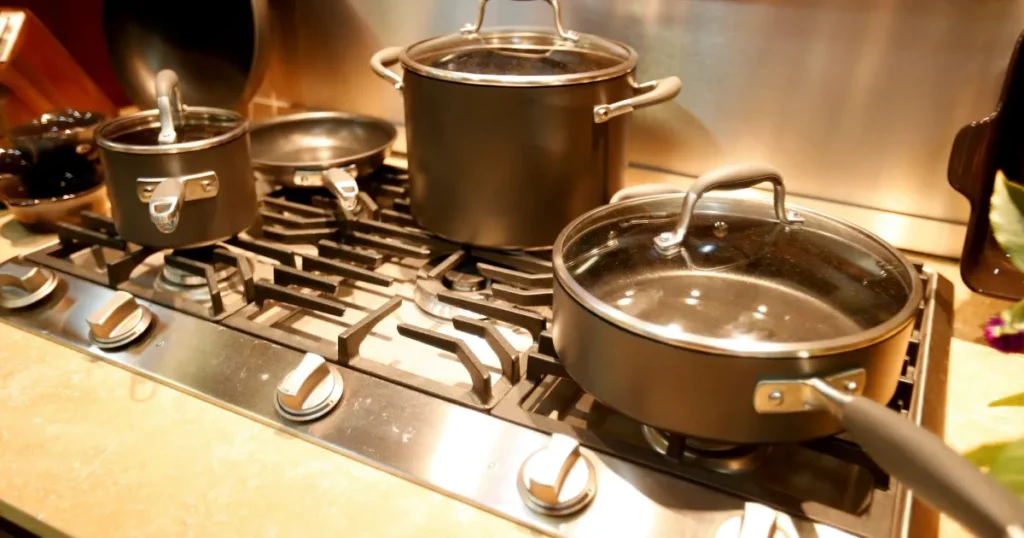
Safe Non-Toxic Nonstick Cookware: How to Determine Its Safety
Purchasing non-toxic nonstick cookware can be surprisingly stressful. Each product claims to be different: PFAS-free, PTFE-free, ceramic, toxin-free, nonstick.
The issue? Many shoppers are comparing labels without truly understanding their meanings.
In reality, cookware is rarely one-size-fits-all. The most effective non-toxic nonstick cookware comes from recognizing which materials are best suited for various cooking styles, rather than hunting for one “perfect” pan that claims to do everything safely without end.
What Does ‘Nonstick’ Actually Mean?
The term “nonstick” refers to performance rather than safety.
A pan may be nonstick due to a chemical coating like PTFE (Teflon), a ceramic-like coating, or even seasoning that accumulates on cast iron or carbon steel. The term itself does not indicate what materials or chemicals are present in the cookware.
Is ‘Non-Toxic Cookware’ a Regulated Term?
No. There is no established industry definition for “non-toxic” cookware. Brands may use the term even if their products include coatings or materials that some consumers wish to avoid.
This is why cookware labels often sound safer or clearer than they truly are.
What Is the Difference Between PFAS, PTFE, and PFOA?
These three terms frequently get confused on cookware packaging.
PFAS refers to a large group of synthetic “forever chemicals.” PTFE — used in traditional Teflon-like pans — falls within that group. PFOA was a distinct chemical previously used in PTFE manufacturing.
PFOA raised the most significant health concerns and was phased out by 2015, as per the EPA. That’s why many pans now promote themselves as “PFOA-free.”
Does ‘PFOA-Free’ Mean the Cookware Is PFAS-Free?
Not necessarily. Many modern nonstick pans are PFOA-free yet still utilize PTFE coatings, which belong to the PFAS category. Therefore, shoppers seeking alternatives to Teflon cookware should pay closer attention to “PFAS-free” labels rather than relying solely on “PFOA-free.”
Is Modern Nonstick Cookware Unsafe?
Not by default. Modern PTFE cookware is generally deemed stable under normal cooking conditions, particularly at low to medium temperatures. The most considerable concerns arise when pans are overheated, scratched, or visibly damaged.
“Modern nonstick pans are safe when used correctly,” Jorge Dionisio, chef and owner of Kansha in NYC, told CNN. “The key is controlling the heat. Keeping them at medium to medium-high will prevent any issues.”
Is Ceramic Cookware Really Safer?
It depends on what “ceramic” means.
Many products marketed as ceramic cookware are actually aluminum pans coated with a ceramic-style nonstick layer. These coatings are often promoted as alternatives to Teflon pans because they are generally PTFE-free.
However, ceramic-coated cookware still wears down over time, losing its slick surface gradually.
What Is the Best Non-Toxic Nonstick Cookware to Buy?
Typically, it is not just one type. Many seasoned home cooks rely on various materials instead of expecting a single pan to perform flawlessly for every task. A common setup includes:
- Stainless steel for sauces, acidic foods, and high heat
- Cast iron or carbon steel for searing and browning
- Ceramic-coated or traditional nonstick pans for eggs, pancakes, and delicate foods
This approach usually yields better results than trying to force every cooking task onto a single pan.
Can Stainless Steel or Cast Iron Actually Become Nonstick?
Yes — provided you use proper techniques.
Preheating the pan, using enough oil, and allowing food to release naturally before flipping can noticeably reduce sticking. Cast iron and carbon steel also improve with seasoning, which can create a smoother cooking surface over time.

Many individuals eventually discover that nonstick non-toxic cookware is often more about cooking practices than the coating itself.
Should Nonstick Pans Be Replaced Regularly?
Generally, yes. Coated cookware is not meant to last indefinitely. Once the surface shows signs of scratching, flaking, or is noticeably less slippery, it’s time to replace it.
Conversely, high-quality stainless steel, cast iron, and carbon steel cookware can endure for decades with proper care.