
Transformations in Little House on the Prairie: Absent Characters and Religious Themes
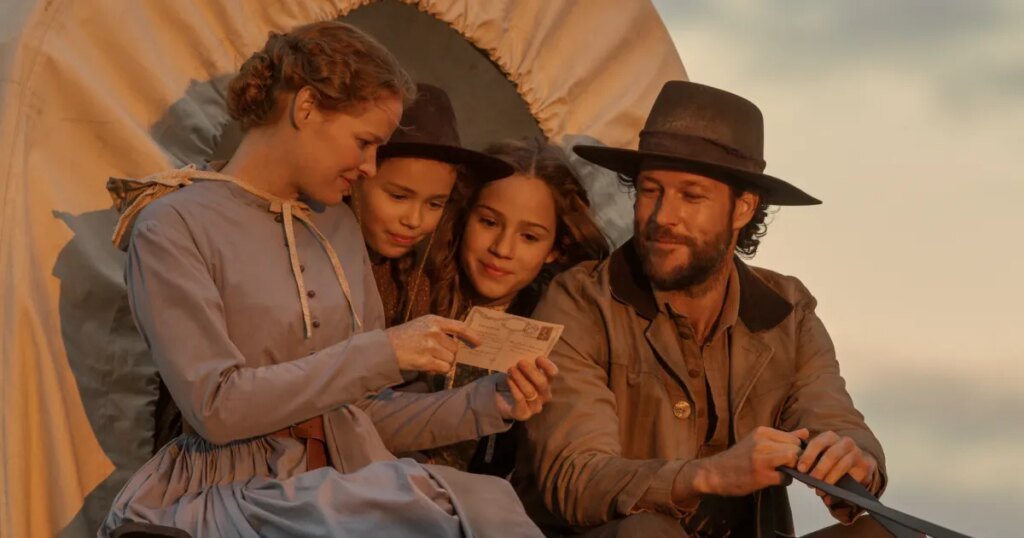
Netflix has reimagined Little House on the Prairie, but what are the differences between their rendition and the original series?
Inspired by the book series authored by Laura Ingalls Wilder, the Little House on the Prairie saga follows the Ingalls family as they navigate life on their farm near Plum Creek, close to Walnut Grove, Minnesota, during the late 1800s.
The show first aired on NBC in 1974, featuring a cast led by Michael Landon, Karen Grassle, Melissa Gilbert, and Melissa Sue Anderson. The series also helped kickstart the careers of Jason Bateman, who portrayed James Cooper Ingalls, and reality television star Kyle Richards, who played Alicia Sanderson Edwards.
Following Landon’s departure in the show’s ninth and final season, it was renamed Little House: A New Beginning. Three movies were subsequently made after the end of Little House on the Prairie.
Netflix announced its version is set to debut in July 2026 and has already been renewed for a second season, with Alice Halsey, Luke Bracey, Crosby Fitzgerald, and Skywalker Hughes in leading roles.
Joining the cast are Jocko Sims, Warren Christie, Wren Zhawenim Gotts, Meegwun Fairbrother, Alyssa Wapanatâhk, and others.
Continue reading to discover how Netflix’s adaptation differs from the 1970s version:
Missing Characters
In this new adaptation, while the youngest Ingalls sibling, Carrie, eventually joins the family, she is not present from the start as one might expect.
Additionally, viewers were anticipating the appearance of Nellie Oleson in season 1, but she was absent, with her character expected to be introduced in the upcoming season 2.
A Change of Place
In contrast to the original series, the Netflix adaptation begins with the Ingalls family relocating from Wisconsin to establish a homestead near Independence, Kansas, in the 1870s. In Laura Ingalls Wilder’s books, however, the story takes place at Plum Creek near Walnut Grove, Minnesota.

By the end of season 1, the Ingalls family finds themselves burdened by debt. This leads them to decide on a move to Plum Creek, bringing their storyline back in line with the original narrative.

Little House on the Prairie premiered on NBC just over 40 years ago in September 1974. The cherished series seems as relevant as ever today, drawing from the beloved books of the same name by Laura Ingalls Wilder. It chronicles the experiences of the Ingalls family in Walnut Grove.
Religion Themes
In the original series, the family’s church attendance and their bond with spirituality are emphasized. While faith does make an appearance in Netflix’s adaptation, it plays a less dominant role, aligning it more closely with the source material.
Incorporating Indigenous Narratives
Netflix’s rendition makes a conscious effort to center season 1 around an Osage family, a theme not present in either the books or the 1970s series.