What Is Retailtainment? A Guide to Affordable and Free Destinations
Shopping trips are evolving into unique experiences. Major destinations are betting that concerts, theme park attractions, holiday tree lightings, and interactive classes will maintain foot traffic even as online shopping expands. The great news for inquisitive visitors is that participation doesn’t require an expensive ticket. Retailtainment is transforming malls and flagship stores across the nation, with many prominent brands offering free or low-cost ways to join in.
What Retailtainment Actually Means
The term merges two familiar concepts. According to the marketing agency Into The Minds, “The term ‘retailtainment’ is derived from the combination of the English words ‘retail’ and ‘entertainment.’ This strategic approach incorporates entertainment elements into the shopping environment to revolutionize the traditional shopping experience.”
In practice, this can manifest as a mall designed around a full-scale amusement park, a plaza that doubles as a concert venue, or a store that offers complimentary classes taught by staff. Some of the finest experiential retail in the U.S. aims to attract crowds who may not have intended to purchase anything.
Free Things to Do at Mall of America and American Dream
The Mall of America in Bloomington, Minnesota, is the largest mall in the country, featuring over 500 stores alongside various attractions. Its Rotunda hosts concerts, fundraisers, and other free entertainment throughout the year. Families with young children can plan around Toddler Tuesdays, which include free kids’ meals at select restaurants with the purchase of an adult entrée. While some promotions occur weekly, others happen monthly. Seasonal events such as Mall-o-Ween and the holiday tree lighting are also free.
American Dream in East Rutherford, New Jersey, is the second largest mall in the U.S. The first 30 minutes of parking are complimentary, and after that, a full visit costs just $5. The venue hosts a rotating array of free and low-cost events, ranging from movie nights to food festivals. For its Nickelodeon Universe theme park, the points pass system is more affordable than a day pass for casual visitors. Rides are categorized as 3-point or 6-point, with a 3-point pass priced at $7.99 and a 6-point pass at $13.99.

Experiential Retail Examples at Rockefeller Center and Apple
Two of the most notable examples of experiential retail exist outside the traditional mall framework. Rockefeller Center in New York is free to explore, featuring the Channel Gardens and the Atlas and Prometheus statues. Its schedule of free and low-cost events runs throughout the year, including summer concerts, changing public art installations, movie nights, and occasional Broadway performances. During the holiday season, the Rockefeller Center Christmas Tree is accessible to all, without tickets or entry fees. The tree is illuminated daily from 5 a.m. to midnight through early January.
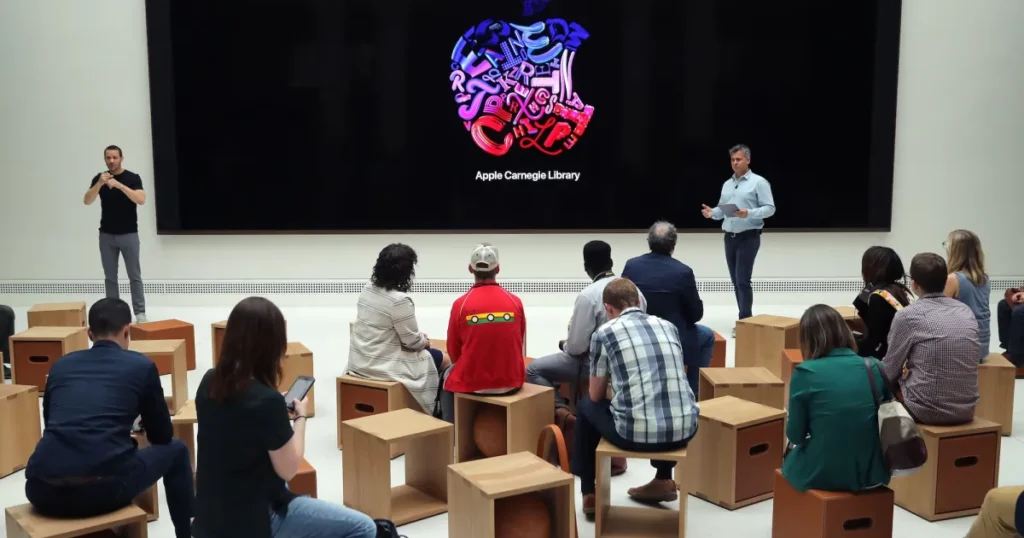
Apple’s flagship stores present a scaled-down version of this concept. The company’s Today at Apple program provides free in-store sessions every day. Visitors can pre-register or drop in if space is available. Topics range from beginner tutorials on the iPhone and MacBook to lessons on photography, video editing, and emoji design. Apple also hosts occasional live concerts and talks with special guests, which typically fill up quickly. Check the live calendar for offerings at your local Apple store, as they change daily.
Why Retailtainment Matters Right Now
As retailers compete with same-day delivery and endless online browsing, the narrative has shifted. The best experiential retail is no longer solely about selling specific items at the register. It focuses on providing customers a reason to leave their homes, enjoy a few hours out, and return. For shoppers, this evolution translates to an expanding array of free concerts, complimentary classes, affordable rides, and holiday traditions integrated into the places they were already visiting.