Jordana Brewster Opens Up About Surrogacy Shame and the Impact on Her Journey as a Mother
Jordana Brewster is opening up about her vulnerabilities as a mother after choosing surrogacy for her sons.
“I felt burdened by a hidden truth: I hadn’t gained my child,” Brewster, 46, shared in a Monday, June 22, essay for The Cut. She expressed feelings of being an “impostor” after the birth of her first son, Julian, in 2013.
After a 3-D sonogram in Texas for her first child, she was driving home when it hit her that her baby was “heading to a place unfamiliar to me, encountering sounds I couldn’t recognize, and getting accustomed to routines that felt foreign.”
“I cried uncontrollably in my hotel room until I felt nauseous—actually, I wished to vomit, because at least that would be real,” Brewster recounted. “I guess I wanted to chastise myself for not doing what any self-respecting woman would: carry her own child. Pregnancy and childbirth had been milestones, and I was mourning an experience I never realized I wanted.”
Brewster explained that her decision for surrogacy was influenced by her health, as she experienced her first seizure at 28.
The Heart Eyes actress, previously married to Andrew Form, disclosed that doctors found a “mulberry-size cavernous malformation (CVM), an abnormal cluster of thin-walled blood vessels, in the language area of my brain.”
CVM could lead to seizures and potentially dangerous bleeding, which could be managed through medication, dietary changes, or sometimes surgery.
Although a doctor recommended avoiding roller coasters and deep-sea diving for her safety, Brewster later learned that her health complications would complicate her motherhood journey.
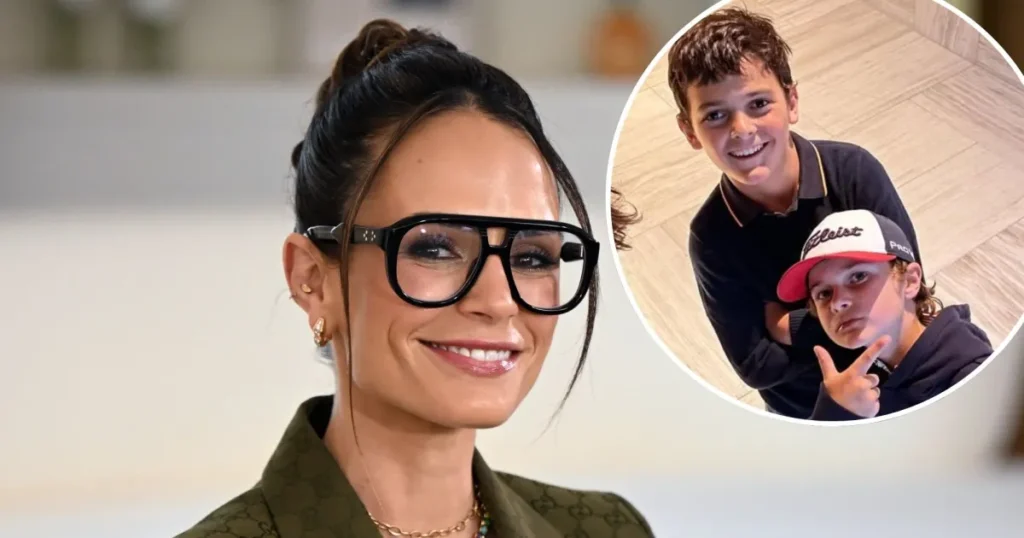
Jordana Brewster with her two sons. Courtesy of Jordana Brewster/Instagram
When Brewster turned 31, she began contemplating motherhood, but her doctor suggested that “the increased blood flow from pregnancy could be risky for both me and the baby.”
After considering surgery, the Fast X actress learned that the CVM’s placement might impact her communication abilities, leading her to reject the procedure. She subsequently opted for gestational surrogacy, only to later grapple with doubts about her worthiness as a mother without carrying her child.
“The preparation kept me occupied, but it felt hollow. I was pretending to be a mother-to-be while feeling detached,” she admitted about her entry into motherhood. “I thought the birth would change that; I was sure I would feel that overwhelming love when I held my child.”
Upon the birth of her eldest son in September 2013, Brewster recalled wanting immediate skin-to-skin contact.
She even insisted on taking her baby home just 24 hours after giving birth, telling herself, “This is my moment to be a mother, and I wanted to do it my way. Yet, I didn’t fully feel like one. I felt like a fraud.”
Though she was optimistic that over time her “maternal instinct” would emerge, the first eight months of Julian’s life proved to be difficult.
Following her return to Los Angeles after working in Texas, she eagerly anticipated being closer to family and forging connections with fellow new moms.
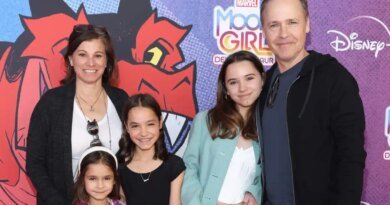
Maria Brewster and Jordana Brewster with Julian and Rowan. Charley Gallay/Getty Images for Zimmer Children’s Museum
However, her feelings of shame and self-doubt were magnified when she joined a mommy and me group.
She recounted introducing herself in a flurry of honesty, saying, “‘Hi, I’m Jordana, this is Julian. I had a gestational surrogate, brain issues—I couldn’t carry. So I don’t breastfeed,’” she recalled. “I gestured to my left temple. Goodness, Jordana, I thought to myself. You’re the essence of ‘Manic Mama, Anxious Baby.’”
Though the other mothers embraced her, Brewster wished she had been “more candid then” with her new friends.
“Perhaps they too were confronting challenges in being present. Maybe they didn’t experience an immediate bond after giving birth,” she reflected. “But I remained silent, believing I was alone. I stayed quiet for years, during playdates, school meetings, and sporting events.”
Brewster admitted, “The hardest part of feeling like an impostor is that it opens the door for others’ cruelty.” She recalled a moment when the head of her son’s kindergarten suggested she take a year off work to “bond” with him during alleged behavioral problems.
“Instead of questioning whether she was gaslighting me, her suggestion confirmed my biggest fear: It was all my fault,” she confessed.
When she had her second son, Rowan, via surrogate in June 2016, she finally found “community” with close family and even organized a music and sensory class for other mothers, slowly beginning to find her footing.
“The shame lessened a bit,” she reflected, yet two years post-Rowan’s birth, her medication for CVM ceased to be effective, leading to two seizures within half a year.
Jordana Brewster with sons Rowan and Julian. Courtesy of Jordana Brewster/Instagram
Following her second seizure, which happened while she was driving, Brewster realized it was time to undergo the risky surgery.
In 2020, she had an awake craniotomy shortly after requesting a divorce from her husband, knowing the operation was crucial for her family. (Brewster filed for divorce in July 2020 after 13 years of marriage and married Mason Morfit in September 2022.)

“Six years after surgery, I feel more at peace,” she stated. “Perhaps the surgery was necessary for me to reconcile my choice not to carry my children. Maybe that’s an oversimplified explanation. Maybe it’s both.”
Brewster reflected on her journey to motherhood, noting how her first surrogate had told her that she was merely “doing the easy part” and that the real work lay in raising her children.
“The true essence of motherhood goes beyond pregnancy. It’s found in the small, unseen daily actions: the playdates, food fairs, school meetings, emergency-room visits, and co-sleeping,” Brewster concluded. “Motherhood is earned; it isn’t something given.”