Street Food Destinations: Six Cities and How to Explore Them
A street-food itinerary works best as a way to explore a neighbourhood, not a race to complete a list of famous stalls. These six cities offer different settings, from organised hawker centres to evening markets. This is a starting shortlist, not a global ranking or a guarantee about any individual vendor.
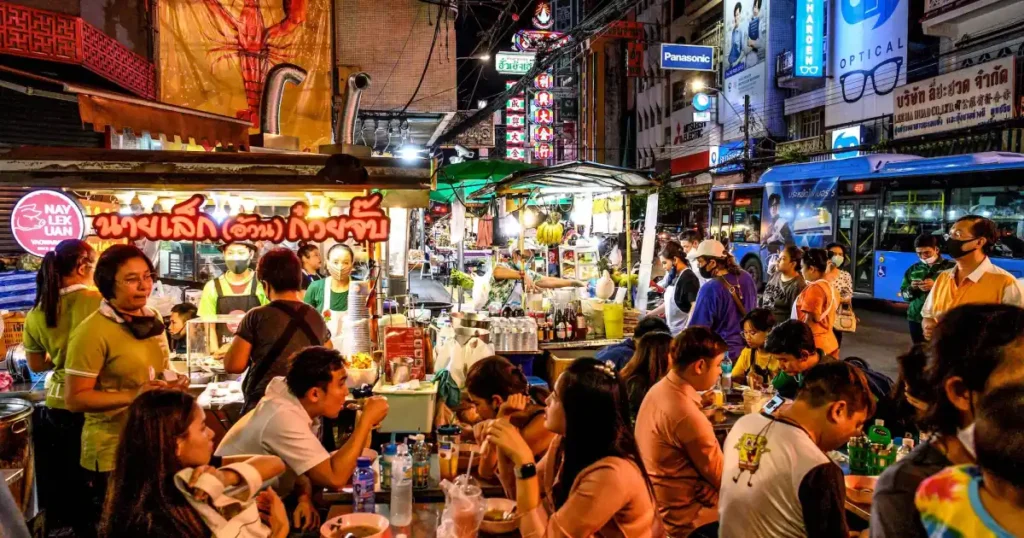
Bangkok: begin with a neighbourhood
Thailand’s tourism authority identifies Yaowarat as a major street-food area. Choose a small section to explore rather than trying to cross the city between bites. Check current access and opening information locally; an old restaurant list is not evidence that every business is still operating.
Decide whether you want a full dinner or several smaller dishes. Ask the price and portion size before ordering, and allow space for drinks and a seated break rather than buying immediately at every stall.
Singapore: use the hawker-centre format
Singapore’s official tourism guide highlights hawker centres as places to experience local food. Maxwell and other centres bring multiple stalls together, but individual opening days can differ. The National Environment Agency publishes closure information, useful when planning around cleaning or works.
Browse before ordering and pay attention to local table-clearing guidance. If your group buys from different stalls, agree on a meeting table first and keep bags out of walkways.
Hanoi and Taipei: two different rhythms
Vietnam Tourism’s Hanoi guide introduces dishes including phở, bún chả and bánh cuốn. Choose dishes because they interest you rather than repeating a doubtful claim that every Vietnamese favourite originated in Hanoi.
Taipei’s official market administration describes Raohe Street as a night market with food and other shopping. Check current market information for your date. Build in time for queues and avoid assuming that every stall runs until midnight.
Mexico City and Marrakech
Mexico City offers a broad range of taco establishments; Michelin’s own city guide can help identify specific businesses to investigate. It is a guide, not a promise that street food everywhere is inexpensive or hygienically safe.
Morocco’s tourism office describes Jemaa el-Fna in Marrakech becoming a large outdoor dining setting in the evening. Ask about the menu and total price before sitting down. Do not assume a drink, side dish or photograph is complimentary.
Safety comes before a famous queue
A busy stall is not proof of safe handling. CDC guidance favours food that is thoroughly cooked and served hot; unsafe water, ice, raw foods and poor temperature control can still cause illness. People with food allergies should explain them clearly, but shared utensils and cooking surfaces may make cross-contact difficult to prevent.
Carry a translated allergy statement where needed and decline a dish if ingredients cannot be established. Hand hygiene, safe drinking water and a flexible alternative meal are more useful than insisting on a particular viral stall. Check destination-specific health advice before travel.